

Diamond stud earrings are easy to love but can be harder to choose. They’re the ultimate jewelry box staple and a forever-favorite gift, but with so many sizes, shapes and settings, landing on just the right pair comes with more choices than you might expect. With this guide, you’ll learn exactly how carat weight translates to size, how different studs look on the ear and all the tips you need to pick the perfect pair.
Diamond Stud Shapes
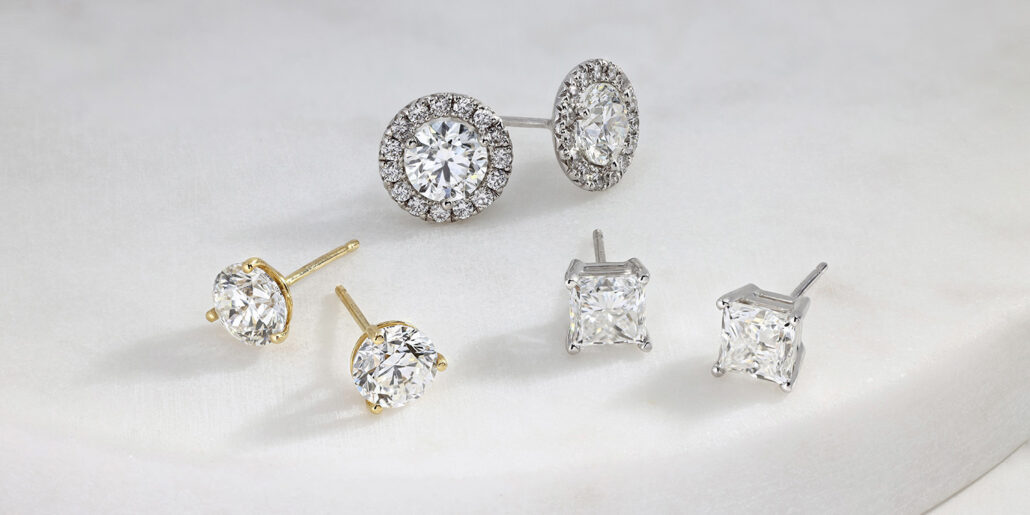
Like diamond rings, diamond earrings are available in any number of shapes, also known as cuts, with round and princess cut being the most popular. When choosing a diamond shape for your earrings, be sure to keep in mind that studs may shift in your ears as you wear them, so it’s a good idea to choose a shape that looks good sideways and upside down as well as right side up.
Diamond Stud Sizes
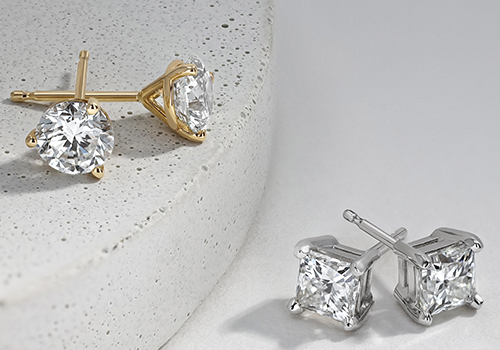
Diamond stud earrings come in just about every size imaginable, and they’re measured by their carat total weight (CTTW) which is the combined weight of both stones. For example, if you’re looking at a pair of 1.00 cttw solitaire diamond studs, each stud will be 0.50 carats. Learn more Open in new window about the differences between CT, CTTW and TW.
It’s important to understand total carat weight when shopping for diamond earrings so you end up with a pair you truly love. To find the very best diamonds for you, take a look at the 4Cs Open in new window, the industry standards that define a diamond’s cut, color, clarity and carat weight.
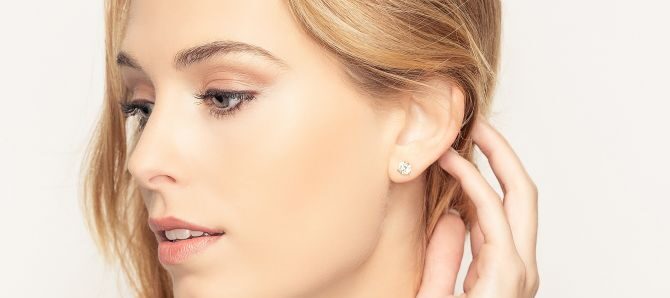
To make it easier to picture how each carat weight looks on the ear, we’ve put together a diamond stud size chart that lets you see our most popular carat weights in real life.
.25cttw Diamond Stud Earrings
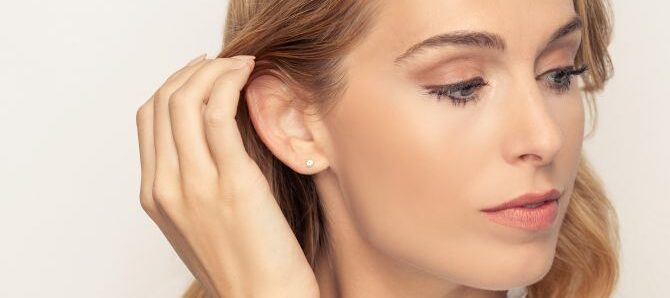
.50cttw Diamond Stud Earrings
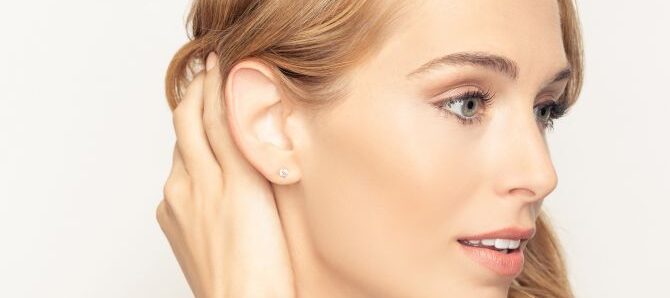
1.00cttw Diamond Stud Earrings

1.50cttw Diamond Stud Earrings

2.00cttw Diamond Stud Earrings
Natural vs Lab-Grown Diamond Studs
When it comes to diamonds, sparkle is a given, but how your diamond came to be is a different story. Natural and lab-grown diamonds each have a unique path to brilliance, and both make stunning studs. Lab-grown diamonds are chemically, structurally and visually identical to natural diamonds. The fundamental difference between lab-grown diamonds and natural diamonds Open in new window comes down to their origin. Natural diamonds were formed billions of years ago deep within the earth’s crust, whereas lab-grown diamonds are grown in a laboratory over a 2-3 month timespan.
Lab-grown diamonds can make for an appealing alternative to mined diamonds, with their affordability being one of the most popular reasons to choose a lab-grown diamond Open in new window.
Diamond Stud Settings
Diamond stud settings come in many different styles. Most commonly, you’ll see prong settings, bezel settings, and halo settings used to secure the diamonds in stud earrings. Let’s touch on the advantages of each of these setting styles.
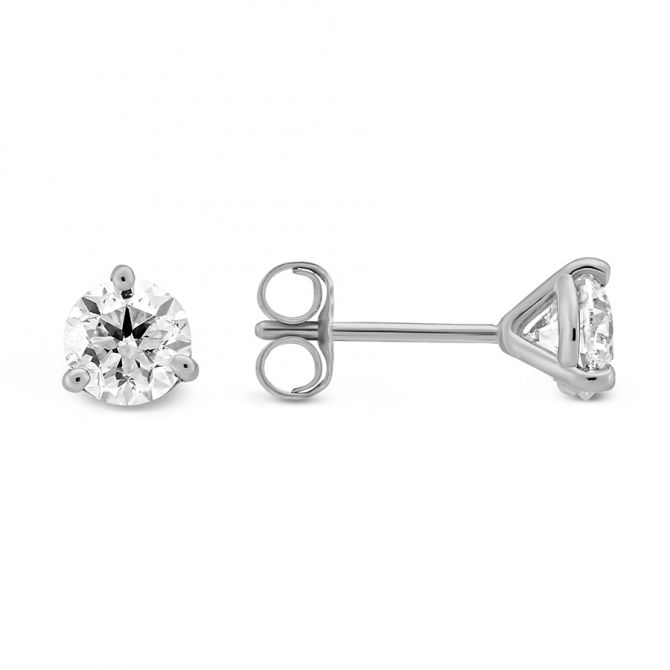
Prong Settings
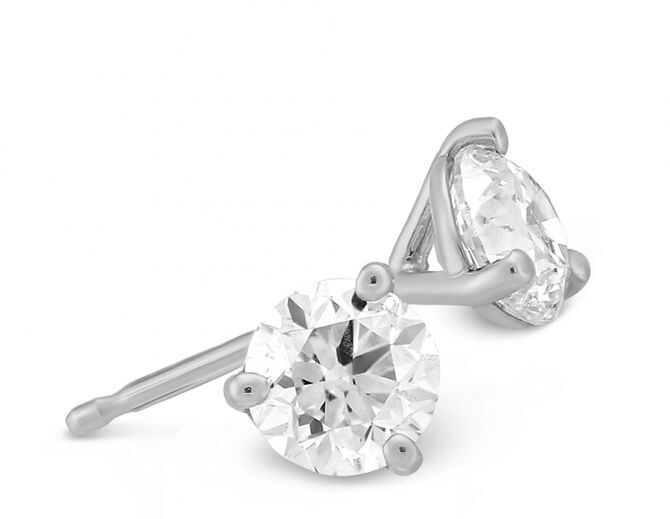
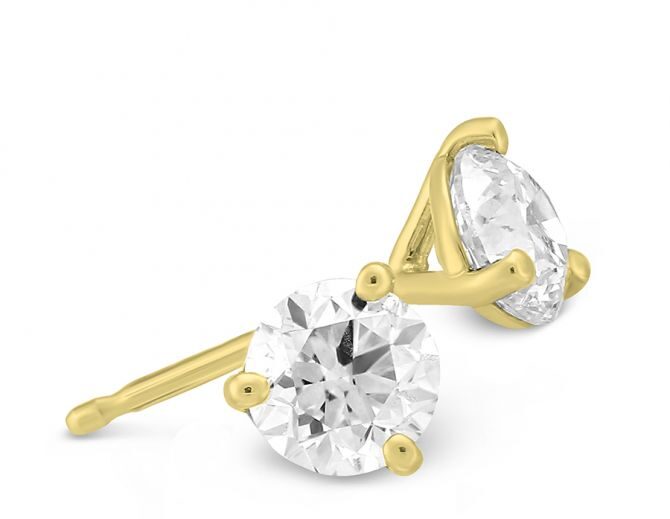
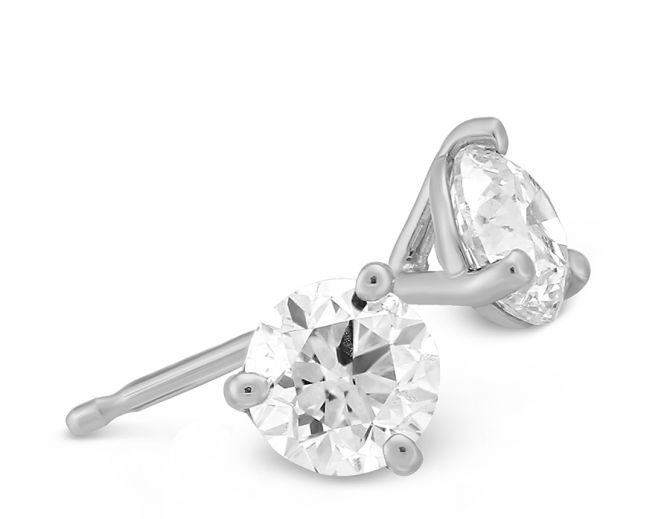
Prong settings consist of prongs, or pointed pieces of metal, that hold a diamond in place. Prong settings can have any number of prongs, but most commonly you’ll see three-prong settings, known as martini prong settings. Additionally, there are basket prong settings, which feature prongs that secure a stone in a basket-like shape. One major advantage of prong settings is that they allow the sides of your diamonds to catch more light, maximizing their brilliance.
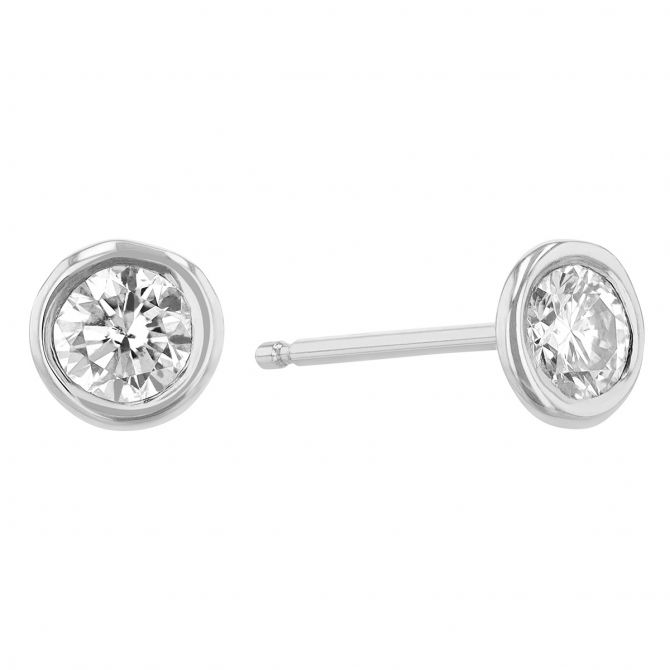
Bezel Settings
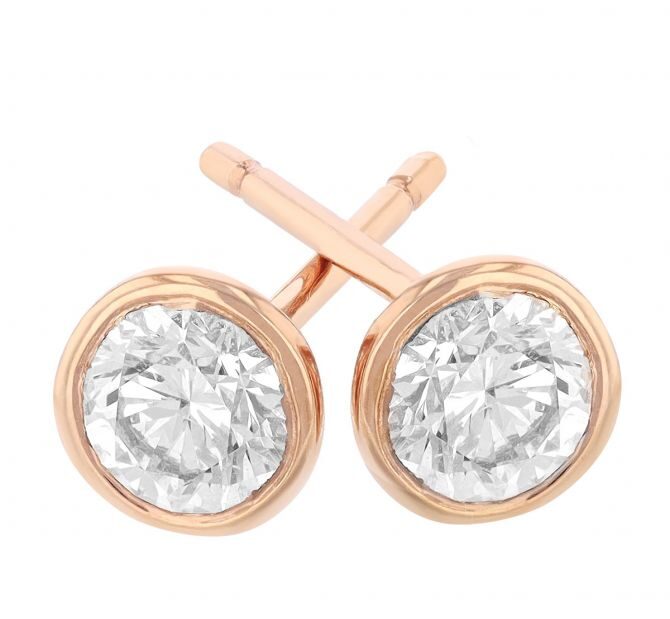
A bezel setting holds a diamond in place with a ring of metal. This metal ring snugly fits around the diamond, keeping it securely in place and providing ample protection from bumps or drops. Keep in mind that bezel set diamond stud earrings allow for slightly less light entry than prong settings.
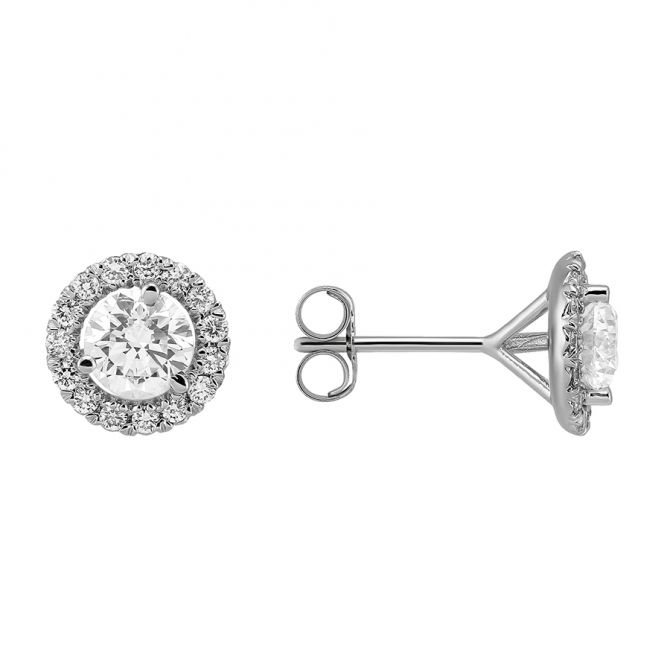
Halo Settings
Halo diamond stud earrings consist of one or more rings of smaller diamonds surrounding a center stone. These smaller accent diamonds add brilliance to your diamond earrings, creating a high-impact look. As an added bonus, a halo setting will make the enclosed diamond appear larger than it actually is.
Diamond Stud Metal Types
When choosing a setting for your diamond studs, you’ll also want to consider which metal type and color is preferred. Stud earring settings are usually crafted from one of four precious metals: white gold, yellow gold, rose gold, and platinum. White gold is the most popular option as it’s a classic look that blends well with the diamond. If you are sensitive to metals, platinum is a good choice: it’s hypoallergenic Open in new window and unlikely to cause an allergic reaction no matter how long you wear it. While white gold and platinum Open in new window are similar in style, they differ in durability, weight and price, with platinum being more durable, heavier and more expensive than gold.
FAQs
What Is the Ideal Size for Everyday Diamond Stud Earrings?
Many people find that 0.25–1.00 total carat weight (CTTW) hits the sweet spot. The ideal size also depends on your personal style, your ear size and whether you plan to wear other earrings alongside your studs. Discover how to build your own earring stacks Open in new window in our guide.
How Do I Choose the Right Size of Diamond Studs for Special Occasions?
For special occasions, 1.00–2.00 cttw diamond studs hit just the right note. Think outfit, hairstyle and the setting: larger studs wow with updos or evening wear, while medium ones are the perfect all-rounder for both formal and cocktail attire.
What Should I Consider When Buying Diamond Studs Online?
Pay attention to total carat weight, the 4Cs and the metal and setting. Be sure to review images or videos of the studs being worn to see how they look in real life. Borsheims offers a 90-day return policy on jewelry, so you can shop confidently.
Sparkle comes naturally. Choosing diamond studs that feel like you just makes it even better. With the right size, cut and style, you’ll discover earrings that look perfect on you and feel like a joy to wear. Explore diamond stud earrings online at Borsheims.com.