

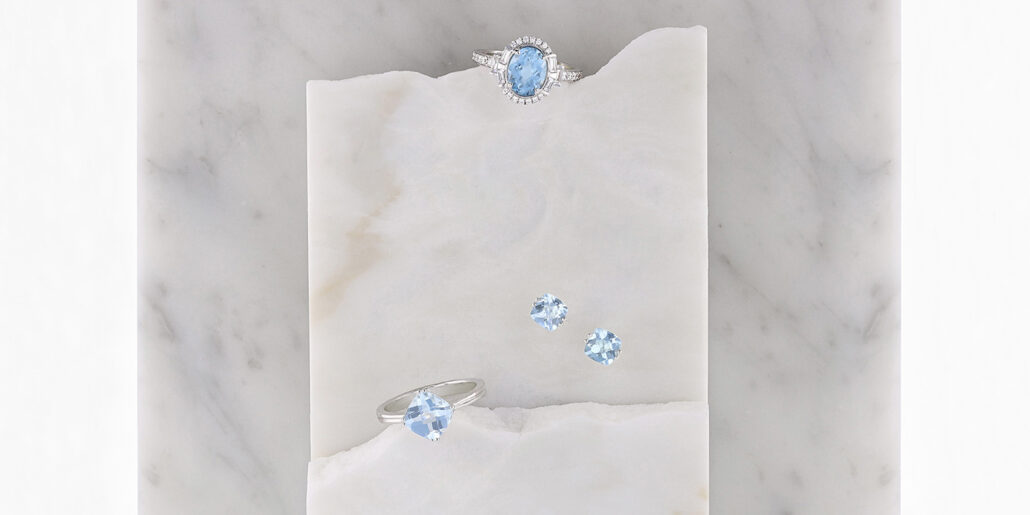
Aquamarine: March Birthstone Quick Facts
Aquamarine Color: Ranges from light blue to deeper green-blue
Aquamarine Mohs Hardness Scale Rating: 7.5 to 8
Aquamarine Symbolism & Meaning: Youth, health and hope
Aquamarine Zodiac Signs: Pisces and Aries
Other Recognitions: Traditional gemstone for the 19th wedding anniversary
What Is Aquamarine?
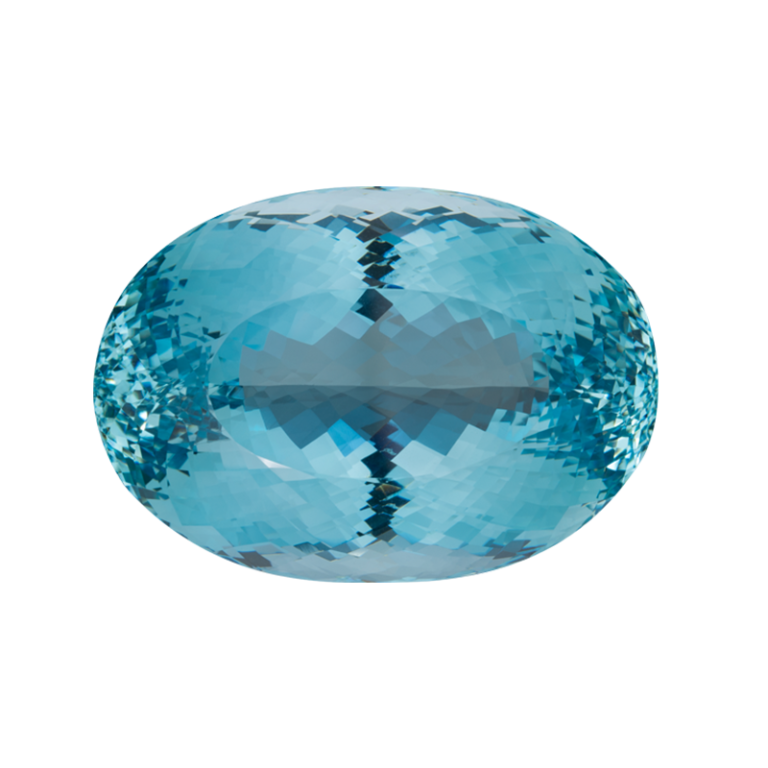
Aquamarine is a member of the beryl family and a sister gem to emerald. While traces of iron determine its coloring, aquamarines are typically light greenish-blue to blue.
How Is Aquamarine Formed?
Aquamarine grows in pencil-shaped hexagonal crystals and is found in primary (hard rock) and secondary (weathered) pegmatite deposits.
Where Is Aquamarine Found?
This gemstone is mined mainly in the Brazilian state of Minas Gerais, with another important mining spot being in the Karakorum foothills of Pakistan. Smaller deposits can be mined in Kenya, Madagascar, Nigeria, Zambia, Mozambique, China, Myanmar, Russia and Ukraine. Stateside sources include the Mount Antero area of Colorado, where aquamarine is the state gem, and California’s Riverside and San Diego counties.
Aquamarine History & Meaning
Invoking the tranquility of its namesake, aquamarine is derived from the Latin word “aqua,” meaning water, and “marina,” meaning the sea. Believed to protect sailors, aquamarine was often aboard ships in ancient times to guarantee a safe voyage. Many ancient medicines used powder from aquamarine to help cure infections, particularly eye ailments.
The serene blue or blue-green color is said to help those with a temper, allowing the wearer to remain calm and levelheaded. The stone is also considered to be a great addition to self-care practices and is used widely as a meditation aid to help one cultivate more inner tranquility.
Aquamarine Colors, Characteristics & Value
Evoking the colors of the sea, aquamarines are often clear as water and symbolize purity of soul and spirit. Aquamarine is often light in tone, with its blue or blue-green coloring appearing more intense in larger stones. One of the significant benefits of this gemstone’s color is that it complements a variety of metal colors and complexions. Jewelers value specific shades of aquamarine—the more intense the blue color, the more valuable the stone. Green-tinged aquamarines tend to be less expensive. High-grade aquamarine is sometimes imitated with blue topaz, colored glass or heat-treated low-grade aquamarine stones. Synthetic aquamarine is not economical to produce and is actually aquamarine-colored synthetic spinel.
Gem-quality crystals are pleochroic, meaning they appear colorless when seen from some angles. Tumbled stones may range in color from a pure milky blue to a pearly turquoise green. Most natural aquamarine is heat treated to remove the green tint to reveal the preferred intense blue color. If the heat is too high, the stone can suffer discoloration. Color can also be improved with neutron and gamma irradiation, but these changes do not last.
Aquamarine Care & Cleaning
Aquamarine stones should be cleaned using warm, soapy water. Ultrasonic cleaners are typically safe for aquamarines except when the stone has liquid inclusions or fractures. Heat exposure is not recommended for aquamarines. It is important to have your jewelry professionally cleaned and checked three to four times a year. Aquamarine jewelry should be stored in a jewelry box lined with soft fabric when not worn.
FAQs
How Rare Is Aquamarine?
Aquamarine is considered a relatively abundant gemstone, but high-quality stones with exceptional clarity and rich blue color are much rarer and more valuable.
How to Tell If Aquamarine Is Real
Real aquamarine typically has excellent clarity, a pale blue to blue-green color and natural inclusions under magnification. One of our expert jewelers can confirm authenticity through professional testing.
How Much Is Aquamarine Worth?
Aquamarine prices vary widely based on color, clarity, cut and size. Most common aquamarine stones cost around $50–$200 per carat, while fine, richly colored aquamarines can exceed $1,000 per carat.
Is Aquamarine Expensive?
Aquamarine is generally more affordable than gemstones like sapphire, ruby and emerald, but rare stones with deep blue color and exceptional clarity can command premium prices.
Are There Any Famous Jewelry Pieces Featuring Aquamarine?
One of the most famous aquamarine jewels is the Brazilian aquamarine tiara gifted to Queen Elizabeth II in 1953. Aquamarine has also been featured in numerous royal and museum collections around the world.
What Are the Different Shades of Aquamarine and How Can I Distinguish Them?
Aquamarine ranges from very pale blue and blue-green to deeper, more vibrant blue tones. Lighter shades are the most common, while richly saturated blues, often referred to as Santa Maria aquamarine, are rarer and more valuable. Beyond color, look for strong clarity and brightness, as the finest aquamarines are highly transparent with few visible inclusions.
What Colors Go with Aquamarine?
Aquamarine pairs beautifully with white, gray, navy, silver and soft pastel tones. It also complements yellow gold, white gold and platinum settings.
What Are the Differences Between Aquamarine and Other Blue Gemstones?
Aquamarine is known for its light blue color, exceptional clarity and clean, transparent appearance. Unlike sapphire, which is typically darker, rarer and more durable, or blue topaz, which often displays a more vivid blue hue, aquamarine is prized for its softer color, naturally eye-clean look and availability in larger gemstone sizes.
Aquamarine is a popular gift option for those celebrating March birthdays and those commemorating their 19th wedding anniversary.