

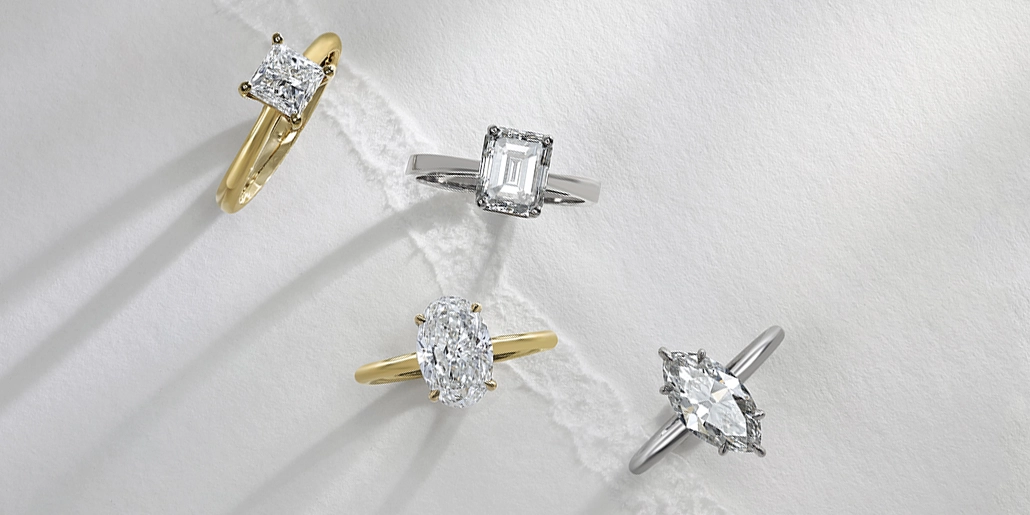
When choosing a diamond, carat weight is only part of the story. Two diamonds with the same carat weight can look surprisingly different on the hand depending on their shape, proportions and how much surface area they display from above.
So, what diamond shape looks the biggest?
The marquise diamond is often considered the shape that looks largest for its carat weight thanks to its distinctive elongated silhouette and impressive face-up spread. It isn’t the only shape that creates a larger-looking appearance. Oval and pear-shaped diamonds are also beautiful choices when you want a diamond that feels substantial, elegant and eye-catching on the finger.
Here’s what to know about the diamond shapes that create some of the greatest visual impact.
Why Does Diamond Shape Affect How It Looks?
Before comparing shapes, it helps to understand the difference between carat weight and visual size.
Carat measures how much a diamond weighs. It doesn’t determine exactly how large a diamond appears from above. A diamond’s cut and proportions influence how that weight is distributed, which affects its visible surface area, often referred to as its face-up appearance.
Some diamond shapes are naturally more elongated, allowing more of their weight to be displayed across the top of the stone. As a result, they can appear larger than a round diamond of the same carat weight.
That’s why shape can be an important consideration for anyone hoping to maximize visual presence without necessarily increasing carat weight.
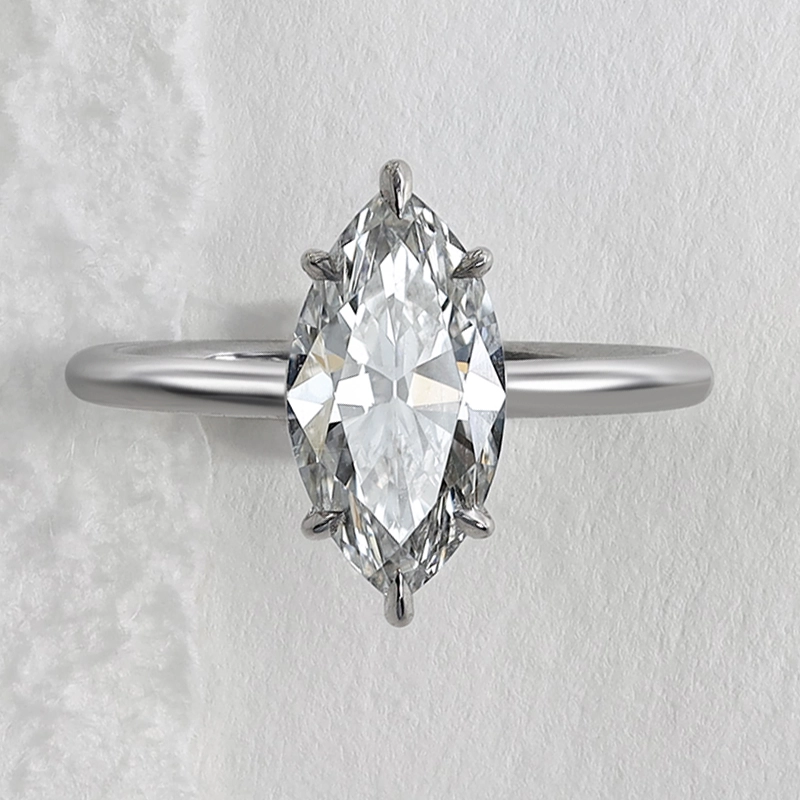
1. Marquise: The Diamond Shape That Looks the Biggest
With its graceful silhouette and pointed ends, the marquise diamond is often the first shape considered when the goal is a larger-looking diamond.
The marquise features curved sides that taper to two points, creating a distinctive elongated outline that stretches beautifully across the finger. According to GIA, marquise diamonds are typically more elongated than oval and pear shapes, with length-to-width ratios commonly ranging from approximately 1.5:1 to 2.5:1.
That additional length contributes to the marquise’s impressive face-up presence. Rather than concentrating its weight into a more compact shape, the diamond extends across the finger, creating the illusion of a larger stone.
The shape also offers another benefit: it can visually elongate the finger, making it an especially flattering choice for an engagement ring.
When selecting a marquise diamond, proportions matter. Look for a balanced, symmetrical outline with properly aligned points. Like other elongated brilliant shapes, marquise diamonds can display a bow-tie effect, a darker area that appears across the center of the stone. Viewing the diamond carefully and working with a trusted jeweler can help ensure exceptional beauty and brilliance.
The takeaway: If visual size is your priority, the marquise is difficult to overlook. Its elongated proportions create remarkable presence while maintaining an elegant, distinctive silhouette.
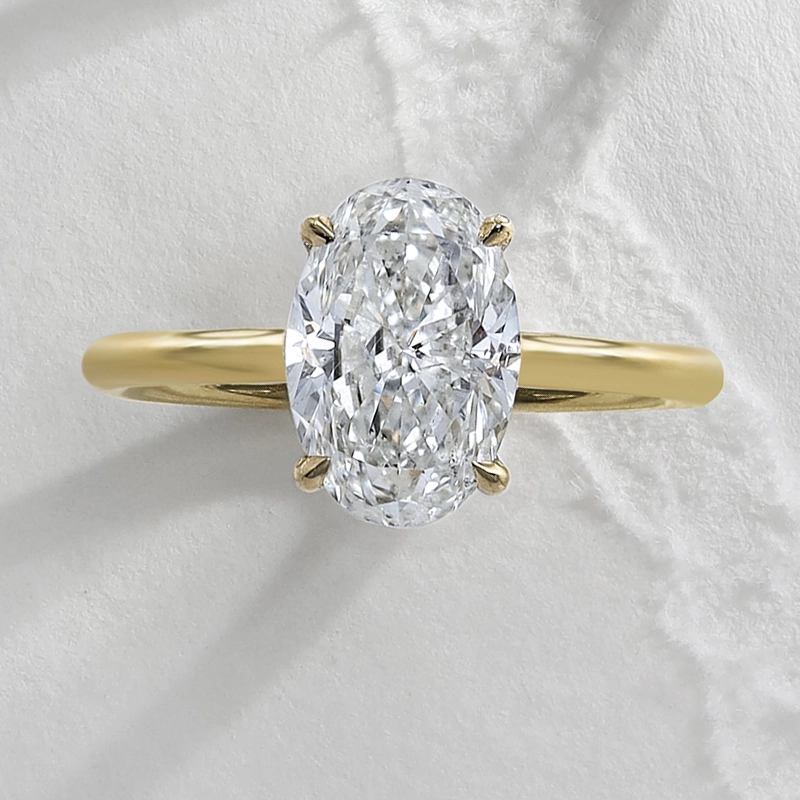
2. Oval: Elegant, Elongated and Timeless
The oval diamond is another shape celebrated for appearing larger than a round diamond of the same carat weight.
An oval takes the brilliance associated with a round diamond and stretches it into a graceful, elongated silhouette. Its curved edges create a softer look than a marquise while still offering the visual impact that comes with greater finger coverage.
GIA describes elongated shapes such as oval, marquise and pear as capable of creating the illusion of greater size compared to a round diamond of the same carat weight.
Oval diamonds are also remarkably versatile. Their refined proportions complement everything from classic solitaire engagement rings to contemporary settings and halo designs. Depending on the length-to-width ratio, an oval can feel subtly elongated or more dramatically slender.
For those seeking a diamond with impressive presence and enduring appeal, the oval offers a beautiful balance of size, brilliance and sophistication.
The takeaway: Oval diamonds provide excellent finger coverage while maintaining a timeless silhouette that feels both classic and contemporary.
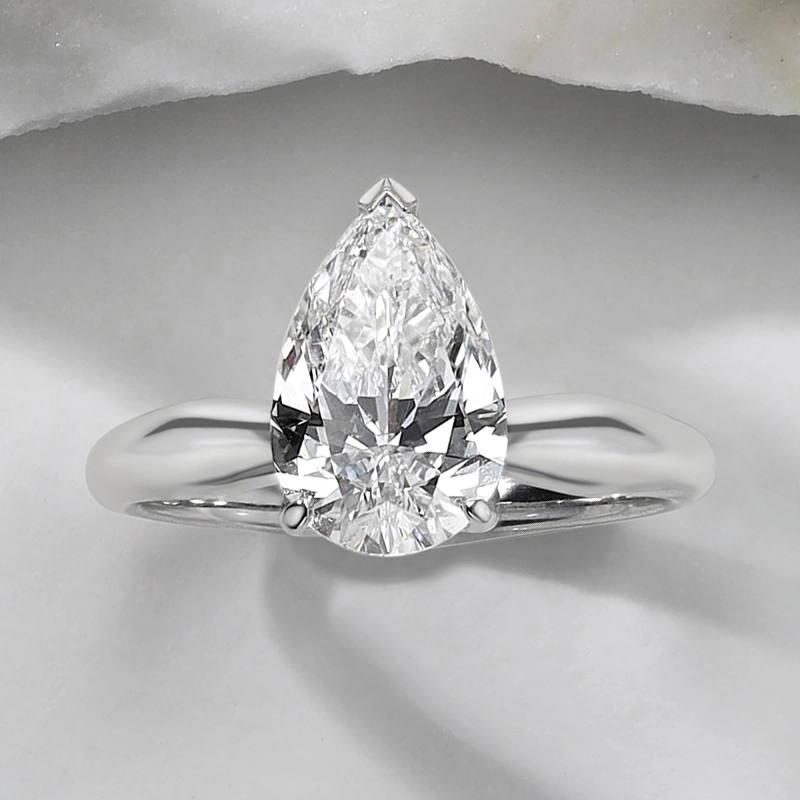
3. Pear: A Distinctive Shape With Striking Presence
The pear-shaped diamond rounds out the trio of elongated shapes known for creating a larger-looking appearance.
Also known as a teardrop shape, the pear combines a rounded end with a single pointed tip. Its length naturally draws the eye along the finger, while its wider end provides generous visible surface area.
The pear is especially distinctive because it blends characteristics of two beloved shapes: the rounded brilliance often associated with an oval and the dramatic point of a marquise. GIA describes the pear as an elongated shape that can create the illusion of greater size while adding visual length to the finger.
As with marquise diamonds, symmetry is an important consideration. The rounded end should flow smoothly into the point, creating a balanced teardrop outline. The pointed tip should also be protected by the setting, often with a V-shaped prong.
The takeaway: Pear-shaped diamonds offer an elegant combination of visual length, impressive presence and distinctive character.
Which Diamond Shape Should You Choose?
If you’re comparing diamond shapes based specifically on which appears the largest, the marquise is often the shape to consider first. Its elongated proportions create an especially expansive face-up appearance.
Oval and pear shapes follow closely behind as excellent options for maximizing visual presence. Each offers its own unique interpretation of the elongated diamond look:
Marquise: Dramatic silhouette with exceptional finger coverage
Oval: Soft, timeless proportions with graceful elongation
Pear: Distinctive teardrop shape that blends curves with a striking point
Of course, the diamond that looks best on your hand is ultimately a matter of personal style. Cut quality, proportions, symmetry and setting all play a role in how a diamond appears once it’s part of a ring.
Finding Your Perfect Diamond Shape
Choosing a diamond isn’t simply about finding the highest carat weight. It’s about discovering the combination of shape, proportions and brilliance that feels most meaningful to you.
If a larger-looking diamond is at the top of your wish list, start by exploring elongated shapes such as marquise, oval and pear. You may find that a beautifully proportioned diamond in one of these shapes delivers the presence you’re looking for while reflecting your individual style.
After all, the most memorable diamond isn’t always the one with the biggest number on a grading report. It’s the one that captures your attention, reflects your personality and continues to take your breath away every time you look at it.