

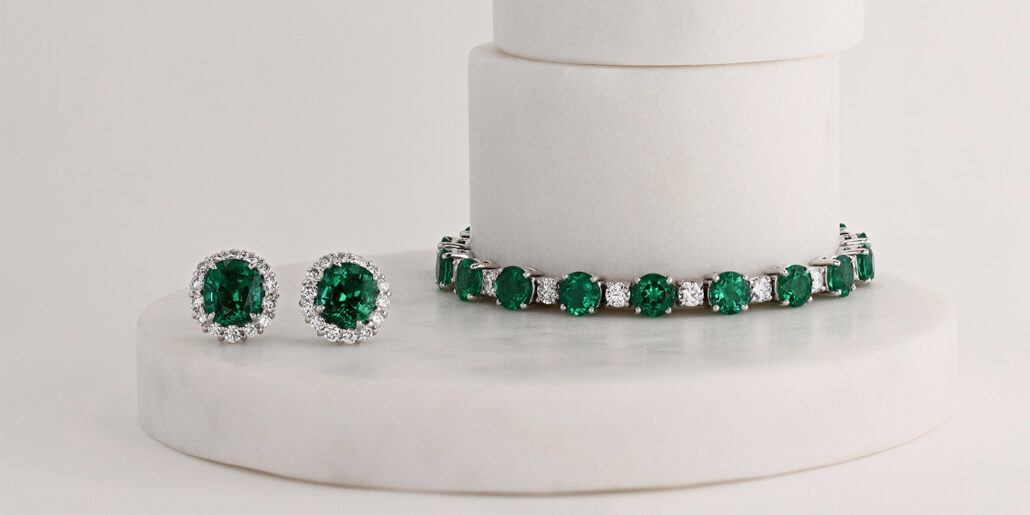
Emerald: May Birthstone Quick Facts
Emerald Color: Medium green to dark green
Emerald Mohs Hardness Scale Rating: 7.5-8
Emerald Symbolism & Meaning: Hope, love, rebirth and renewal
Emerald Zodiac Signs: Taurus and Gemini
Other Recognitions: Traditional gift for the 20th and 35th wedding anniversaries
What is Emerald?
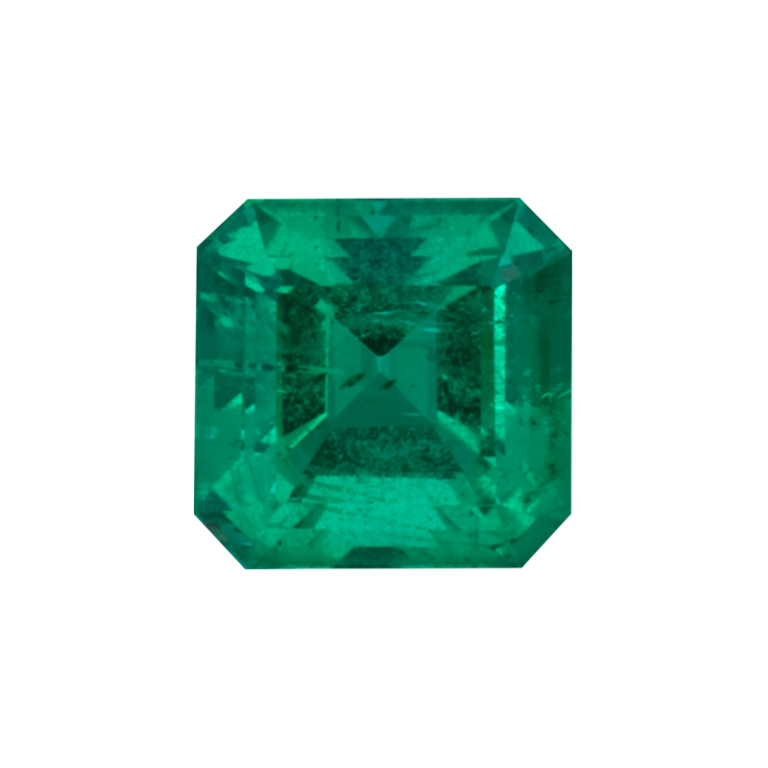
Emerald is a radiant gemstone featuring a vibrant shade of green that’s reminiscent of the lushness of the spring season, making it the perfect birthstone to represent the month of May. The most precious stone in the beryl group, its rich green color comes from the presence of trace amounts of chromium or vanadium.
Emerald Colors, Characteristics & Value
The emerald is treasured for its brilliant, lush green color and is often favored by the rich and famous to wear as statement pieces for big events. While an emerald’s color can range from light green to a deep, rich green, the more vivid the green color, the more valuable the stone. The rarest emerald gemstones will appear to be an intense green-blue color. Emerald gems without visible inclusions are scarce, making this another determining factor of a stone’s value.
Emerald History
As previously mentioned, emerald is a member of the beryl family and is formed by metamorphism and hydrothermal processes associated with magma. The first known emeralds were mined in Egypt, where the gemstone flourished. Emeralds were known to be popular with Cleopatra and are still favored today amongst royalty all over the world. The gem’s appeal spread around the 1500s after Spanish invaders brought emeralds to Europe from South America.
Emerald Care & Cleaning
Emeralds need to handled with care, or they can begin to show wear in the form of scratches and chips. The emerald jewel is a 7.5 to 8 on the Mohs scale of mineral hardness, which makes it more susceptible to scratching than a diamond, ruby, or sapphire. Inclusions, or internal birthmarks, are common in emeralds and can often be seen with the naked eye. Emeralds are often treated to improve their color and clarity in order to minimize the appearance of inclusions. Standard treatment methods include dyeing and fracture filling, in which oils, waxes, and resins are used to fill fractures or other faults.
Emeralds require special care when it comes to cleaning, so it is best to use only mild soap and warm water. You should never put your emerald in an ultrasonic cleaner as the vibrations and heat could cause the stone to crack. We recommend having your emerald jewelry professionally cleaned and checked three to four times a year. When not being worn, emerald jewelry should be wrapped in a soft cloth and kept separate from other jewelry to help protect it from scratches and other damage.
FAQs
How Much Are Emeralds Worth?
Emeralds can range from a few hundred to several thousand dollars per carat, depending on their color, clarity, size and origin. Deep green stones with fewer visible inclusions are typically the most valuable.
Where Are Emeralds Found?
Today, emeralds can be found all over the world but are mined mainly in Colombia, Brazil, and Zimbabwe. Colombia is the world’s largest producer and has been sourcing some of the most beautiful emeralds for more than five centuries.
How to Tell if an Emerald Is Real
A real emerald will usually have natural inclusions and may feel slightly cool to the touch, while perfect clarity can be a sign of a synthetic stone. For a definitive answer, our expert jewelers can inspect it.
Are Emeralds Rarer than Diamonds?
Yes, high-quality emeralds are generally rarer than diamonds, especially stones with rich color and fewer inclusions. This rarity is part of what makes them so valuable.
Do Emeralds Hold Their Value?
Fine-quality emeralds, particularly those with strong color and good origin, can hold their value over time. However, like most gemstones, value depends on market demand and overall quality.
Are Lab-Grown Emeralds Real?
Lab-grown emeralds are real emeralds in terms of their chemical and physical properties, but they are created in a controlled environment rather than formed naturally. They’re often more affordable and have fewer inclusions.
What Color Goes with Emerald Green?
Emerald green pairs beautifully with neutrals like black, white and beige, as well as metallics like gold and silver. For a bolder look, it also complements deep jewel tones like navy or burgundy.
What Is an Emerald Cut?
An emerald cut is a shape, not a type of stone. It features a rectangular silhouette with clean lines and is often used for both diamonds and emerald gemstones.
Emerald is a popular gift option for those celebrating May birthdays and graduations and those commemorating their 20th and 35th wedding anniversaries.