

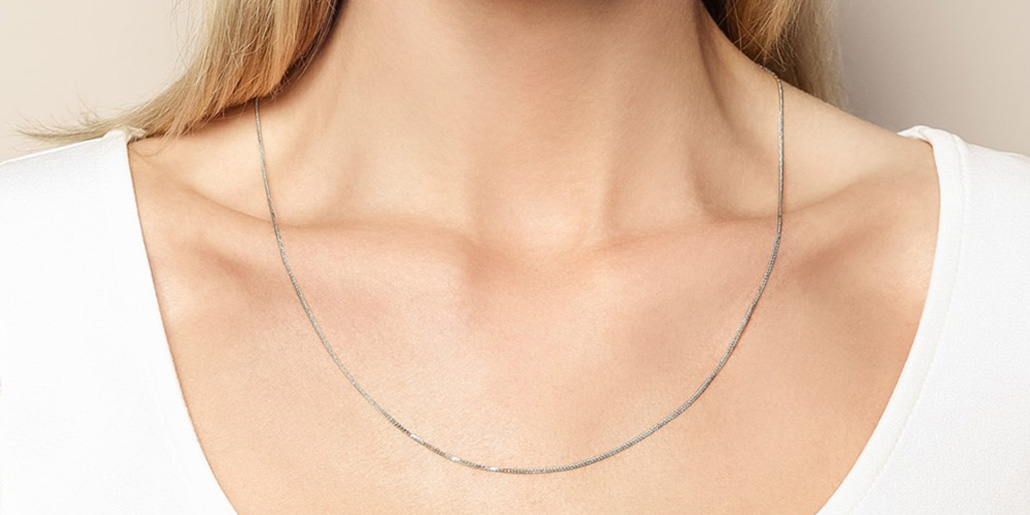
Some chains are engineered to handle significant weight, daily movement and long-term wear, while others are better suited for lightweight charms or decorative use. Understanding how different chain styles are constructed can help you avoid breakage, protect valuable pendants and choose a piece that lasts. This guide breaks down the strongest chain designs in fine jewelry, how they’re built and which ones offer the best support for heavier pendants.
Top 6 Strongest Chain Styles
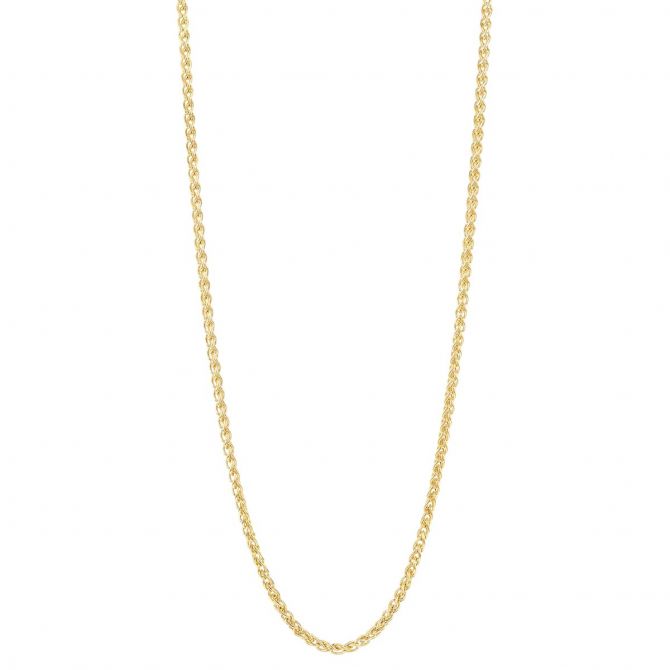
Wheat Chain
The wheat chain is widely regarded as the #1 strongest chain style in fine jewelry, crafted from four strands of intertwined oval links.
- Strength level: Maximum. It mimics the look of a rope chain while featuring a tightly braided, architectural construction that enhances its overall structural integrity. The multi-directional weave distributes tension evenly across the entire chain, making it highly resistant to kinking, warping or breaking, even under consistent stress.
- Our recommendation: We suggest wheat chains for heavy or high-value pendants. They resist stretching under tension and maintain their shape and strength with daily wear, making them one of the most reliable and secure foundations for important pieces.
Rope Chain
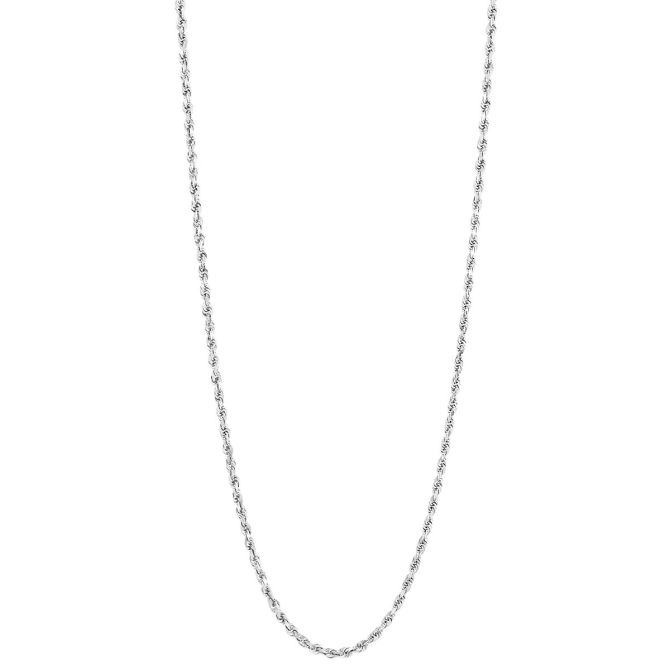
If the wheat chain is the strongest, the rope chain is a very close second. It consists of several small links that are joined together to resemble a literal rope.
- Strength level: Maximum. Because the links are intertwined in a spiral pattern, the weight of a pendant is distributed across multiple points of contact rather than resting on a single link. That layered construction gives the rope chain impressive durability and resilience.
- Our recommendation: The rope chain is one of the most durable designs ever created. It doesn’t kink, doesn’t stretch easily and maintains a substantial, weighty look, even in thinner gauges.
Pro tip: Be mindful of hollow rope chains. Since solid gold rope chains can become heavy (and costly), some are manufactured hollow to reduce weight and price. While they look similar at first glance, hollow styles are more prone to denting and can snap if the outer layer of the link wears thin over time. When security matters, always ask for a solid rope chain.
Curb Chain
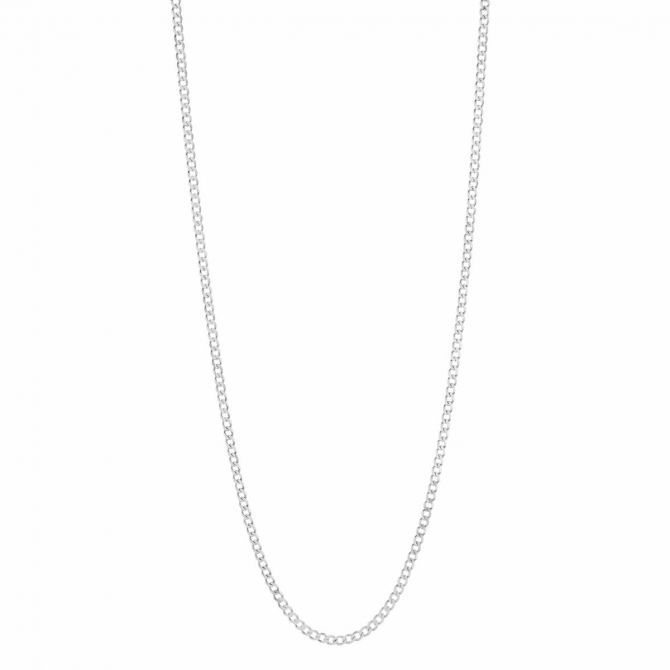
Curb chains are engineered with flat, interlocking links that have been twisted and polished so they rest flush against the skin. This design not only enhances comfort but also contributes to the chain’s overall stability and resistance to tangling.
Strength level: High to Maximum, depending on thickness. The links are typically thick and soldered closed, which significantly increases durability. Because the links are flat and uniform, the chain resists twisting and doesn’t easily catch on clothing, an important factor when supporting a heavier pendant.
Our recommendation: An excellent choice for large medallions, statement pieces or streetwear-style pendants. Their solid construction and balanced weight make them both stylish and structurally reliable for heavier designs.
Franco Chain
Similar to a curb chain but featuring a distinctive “V”-shaped pattern, the Franco chain is essentially a double-curb design woven into a tighter, more intricate structure.
Strength level: High to Maximum. The Franco is incredibly dense, with tightly interlocked links that create a solid, supportive foundation. Its rounded construction helps prevent pendants from flipping or pulling the chain under weight, allowing it to sit evenly and securely.
Our recommendation: An excellent option for medium to heavy pendants, especially when you want a modern, substantial look with added structural support. It’s a strong, reliable choice for everyday wear without sacrificing style.
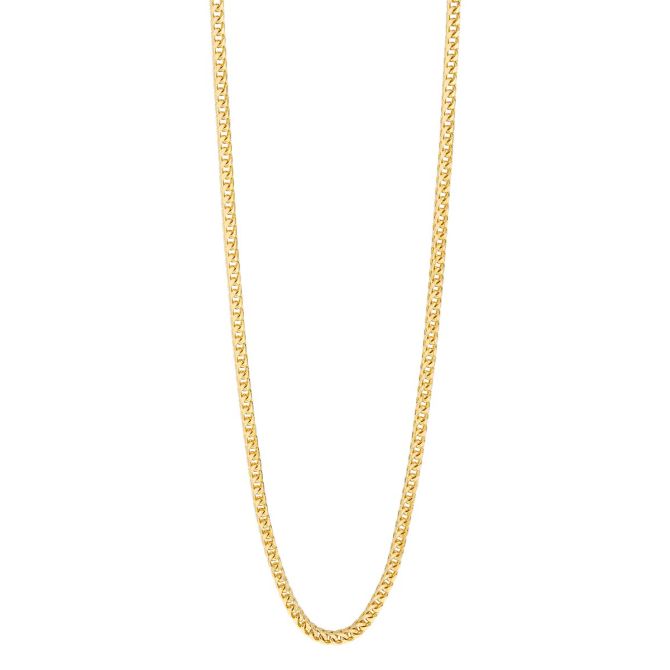
Box Chain
The box chain is a classic, dependable style built from square links that interconnect like a seamless rail system.
- Strength level: Moderate to High, depending on gauge. The box chain’s uniform structure makes it resistant to snapping and less prone to tangling than many traditional link styles. That said, strength is heavily dependent on thickness—very thin or hollow versions can be fragile and may not withstand heavier pendants.
- Our recommendation: Ideal for medium-weight pendants and everyday wear. For heavier pieces, opt for a thicker, solid box chain to ensure lasting durability and support.
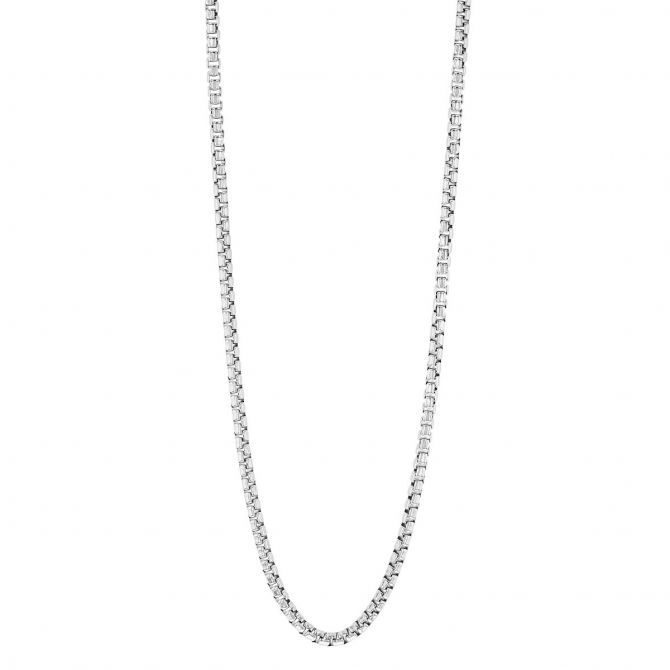
Figaro Chain
The Figaro chain is a variation of the classic curb chain, distinguished by its signature pattern: three shorter circular links followed by one elongated oval link.
Strength level: High. Because it’s built on the same flat, interlocking foundation as a curb chain, it carries that same inherent durability. The links are typically soldered closed, which adds structural security and makes it difficult to break under normal wear.
Our recommendation: A fantastic option for large medallions or statement pendants, especially if you want a bit more visual interest than a standard curb chain. Keep in mind that the elongated link introduces slightly more flexibility compared to a uniform curb chain, but when crafted in a solid gauge, it remains a strong and reliable choice.
Pro tip: Make sure the width of your Figaro chain matches the scale of your pendant. A 4mm–5mm Figaro is exceptionally sturdy and can support just about any pendant with ease.
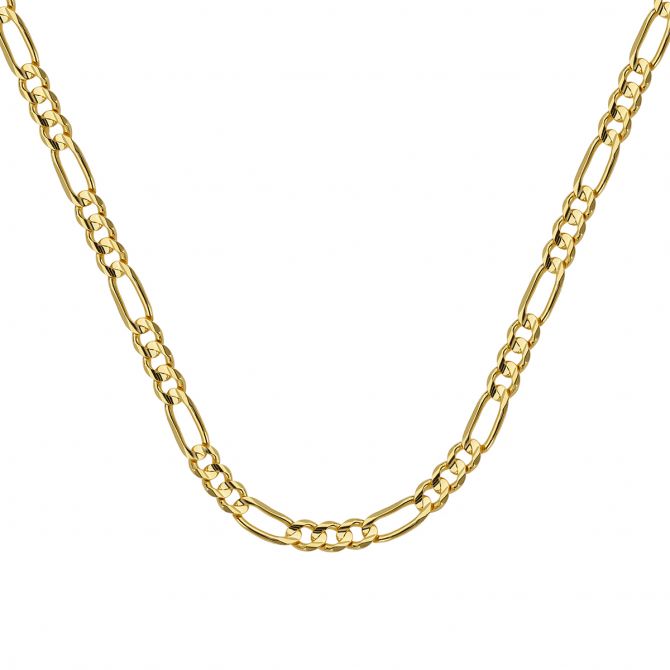
Chains to Avoid for Heavy Pendants
Some chains are beautiful but more fragile by design. Avoid these if your pendant has any significant weight:
- Snake chains: They look sleek, but they are prone to kinking. Once a snake chain kinks, it is permanently weakened and will eventually snap.
- Herringbone chains: These are notorious for “crimping” and cannot support vertical weight well.
- Thin cable chains: While classic, a very thin wire gauge will stretch into an unsightly shape or break under tension.
Best Metals for Chain Necklaces
The chain style is only half the battle; pairing the right design with the right metal is key to making sure your chain stands the test of time.
At the top of the durability scale is platinum, the densest and most resilient precious metal, which resists wear even after years of use. Next is 14k gold, which is actually stronger than 18k or 24k because its higher alloy content makes it tougher. Sterling silver is durable as well, though softer than gold or platinum, so with heavy, long-term wear its links may stretch or show signs of use.
With the right combination, you can wear your favorite pendant confidently, knowing it’s supported by a chain built to last.