

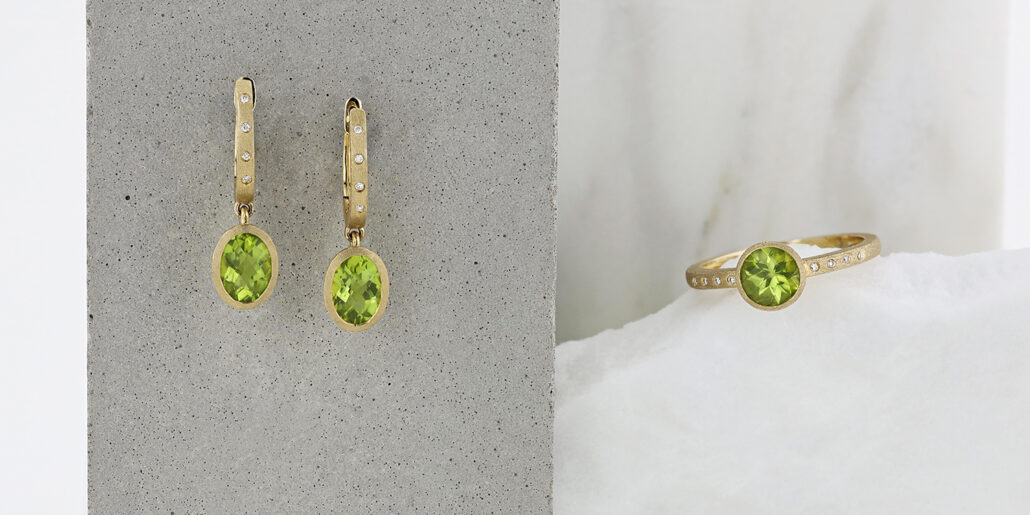
Peridot: August Birthstone Quick Facts
Peridot Color: Shades of green
Peridot Mohs Hardness Scale Rating: 6.5-7
Peridot Symbolism & Meaning: Good fortune
Peridot Zodiac Signs: Leo and Virgo
Other Recognitions: Traditional gift for the 16th wedding anniversary
What is Peridot?
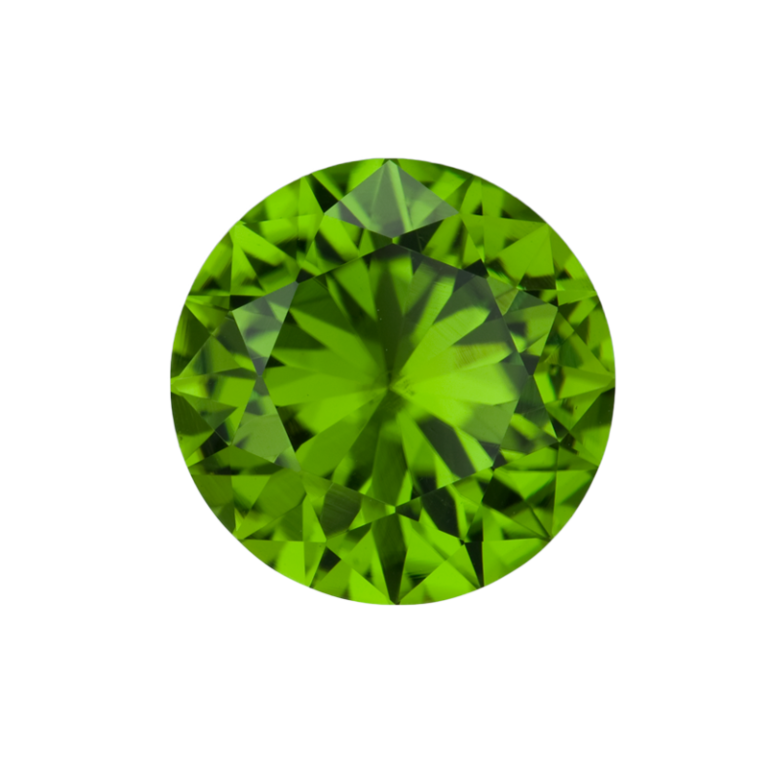
Peridot is the gem-quality form of the mineral olivine. Volcanic activity produces an igneous rock called periodite in which olivine is found. All peridot either comes from deep in the earth’s mantle or, more rarely, from pallasite meteorites.
Where Does Peridot Come From?
Peridot from below the earth’s surface is plentiful, especially in the United States. Arizona’s San Carlos Reservation provides an estimated 80-95% of the world’s peridot supply. It is also found in Myanmar, Australia, Brazil, China, Kenya, Mexico, Pakistan, Sri Lanka and Tanzania.
Peridot History & Meaning
Peridot was mined on the Red Sea island of Zabargad for 3500 years and was treasured by the Greeks and Romans. It was brought to Europe in the Middle Ages by the Crusaders and was used in religious jewelry and artifacts.
In ancient times, these gorgeous green gems were believed to ward off evil spirits and people with malicious intentions. Wearing peridot jewelry is said to improve relationships and marriages. Today, peridot is known as the stone of compassion. It is believed to bring good health, restful sleep and peace to relationships by balancing the mind and emotions.
Peridot Color, Characteristics & Value
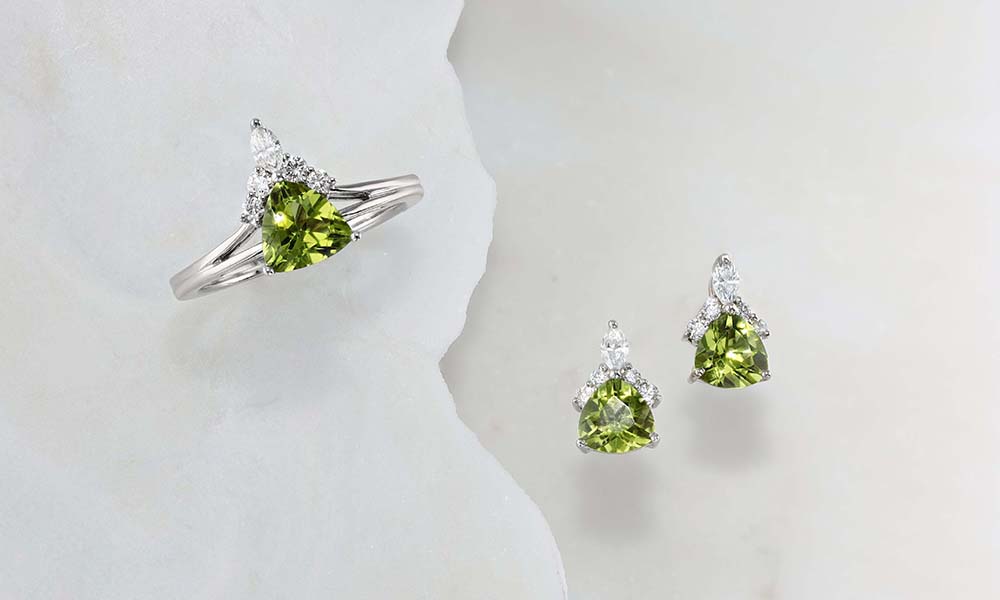
Peridot is the primary birthstone for August and ranges in color from yellowish-green to deep olive green. The intensity of the peridot’s color depends on the amount of iron; the higher the iron content, the deeper green it will be and generally more valuable too. The finest peridot is green with no tinge of yellow or brown. Peridot comes in a variety of shapes and sizes, but large gemstones, especially in flawless quality, are rare.
Peridot Care & Cleaning
Peridot has a hardness rating of 6.5 to 7 on Mohs Scale of Hardness, meaning it’s softer than many gems and is not recommended for everyday use. It can be somewhat brittle, and accumulation of skin oil over time may etch the surface. Cleaning peridot jewelry is a delicate process and may be best left to a professional jeweler. If you are attempting to clean peridot gemstones yourself, it is recommended to use a soft bristle brush with mild dish soap in warm water. Avoid using an ultrasonic or steam cleaner as peridot is susceptible to thermal shock. When not being worn, peridot jewelry should be stored in a jewelry box lined with soft fabric and away from other gems to avoid scratching.
FAQs
How to Tell If Peridot Is Real
Genuine peridot typically shows a lively, slightly olive-green tone and may have natural inclusions rather than appearing perfectly flawless. One of our expert jewelers can confirm authenticity by checking its double refraction and refractive properties.
Can Peridot Be Lab-Grown?
Peridot is very rarely lab-grown for commercial use, as natural sources are relatively abundant and accessible. Most peridot on the market today is mined rather than created.
How Rare Is Peridot?
Peridot is considered moderately rare compared to many gemstones, with notable sources including Arizona and Pakistan. While not extremely scarce, fine-quality stones with rich, even color are more limited.
How Much Is a Peridot Worth?
Peridot pricing varies based on color, clarity and size, but it is generally more accessible than many gemstones. High-quality stones with deep green color and minimal inclusions command higher prices.
Are Gold or Silver Settings Better for Peridot Jewelry?
Both look great with peridot. It really comes down to personal style and upkeep. Gold (especially yellow) gives it a warmer, more classic feel, while silver or white gold makes the green look brighter and more modern, though sterling silver will need occasional polishing since it can tarnish over time.
Peridot is a popular gift option for those celebrating August birthdays and those commemorating their 16th wedding anniversary.